
Reviewed · KUTA
Discover Balinese Mystic & Death Ritual in Bali
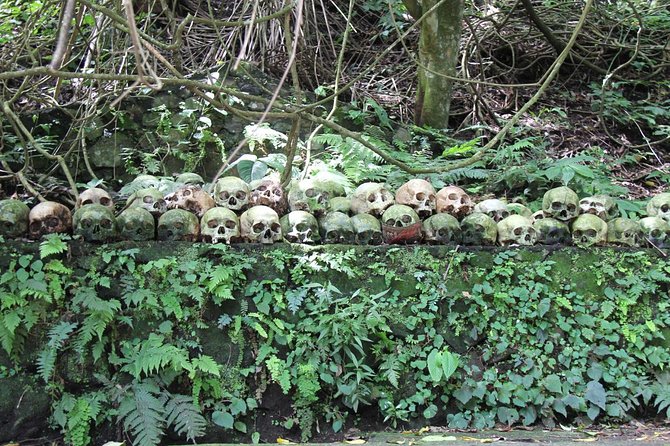
Trunyan is the reason to book this day. The remote village follows a death custom unlike most of Bali: after a cleansing ritual, the body is placed in a bamboo cage rather than cremated. Pair that with Bayung Gede’s hanging newborn placentas, and you get a rare look at two ends of Balinese life.
I like the private format, since you can shape the pace and ask direct questions. I also like the mix of serious cultural stops with the cooler Kintamani Plateau and the fine old buildings at Kehen Temple and Penglipuran. Guides including Mertha and Ah Gung are praised for being friendly, patient, and clear when explaining local customs.
The catch is the road time. From some pickup points, especially Lovina, the route can take about three hours on narrow, winding mountain roads before the boat crossing even begins. This is an 8 to 10-hour day, lunch costs extra, and Trunyan’s subject matter is not light entertainment.
Key points to know before booking
- Trunyan uses bamboo cages instead of cremation: You will see a burial custom that differs sharply from the ceremonies common elsewhere in Bali.
- Bayung Gede shows a rare birth tradition: Newborn placentas are placed in hanging containers, a practice closely tied to the village’s beliefs.
- The speedboat is part of the access: The boat ride adds a memorable element, but it also makes the journey longer and less flexible.
- You travel privately: Only your own group takes part, and the schedule can be adjusted to suit your needs.
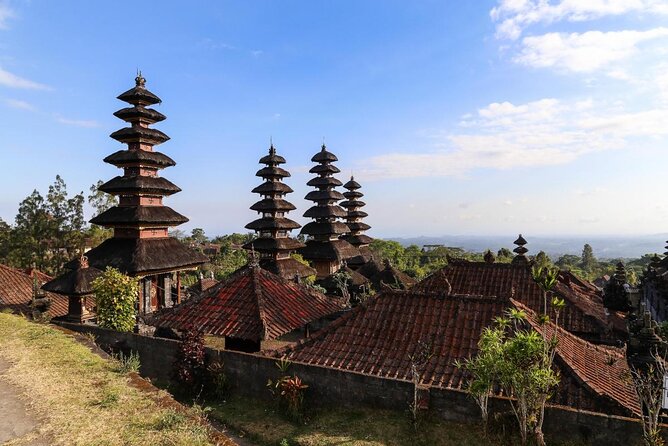
- Five very different stops fill the day: Ritual sites, a volcano and lake view, a temple, and two traditional villages give the tour much more range than a single cultural visit.
- Lunch is not included: Bring money for your midday meal and allow for personal expenses.
Why Trunyan changes the usual Bali story
Many Bali tours focus on temples, rice fields, beaches, and dance performances. This one goes somewhere more difficult and more revealing. Trunyan offers a look at how one Balinese community handles death, with customs that have remained distinct from the cremation rites associated with much of the island.
The cemetery visit lasts about an hour and includes admission. The dead are cleansed and placed in bamboo cages instead of being cremated. That simple description does not make the stop easy for everyone. You should come prepared for a serious setting and a subject that may feel unsettling.
The value is not in treating the cemetery as a spectacle. It is in hearing the explanation behind the practice and seeing how local beliefs shape daily life. The guide matters greatly here. A patient guide such as Ah Gung can make the difference between a confusing visit and one that gives you a clearer sense of the community’s customs.
You may also meet Balinese priests and healers during the day, depending on how the private schedule is arranged. Since the tour can be customized, ask before departure which meetings are planned and how much time is set aside for them.
Getting to Trunyan is part of the experience, but it is also the main test of your patience. The road from some areas is slow and winding, followed by a boat ride across the lake. A trip from Lovina has been described as roughly three hours by car to the lake, plus about 30 minutes by boat each way. Pickup time and location can affect the total, so do not judge the tour by the advertised stop time alone.
Other Bali days people line up alongside this one:
- Nusa Penida day trip: boat, 4 snorkeling, Manta rays & Land tour
★ 5.0 · 2,033 reviews - Bali Nusa Penida West Private All-Inclusive Tour
★ 5.0 · 1,277 reviews - Private Uluwatu Temple and Kecak Fire Dance Evening Tour in Jimbaran Bay
★ 5.0 · 1,199 reviews
Bayung Gede and the hanging placentas
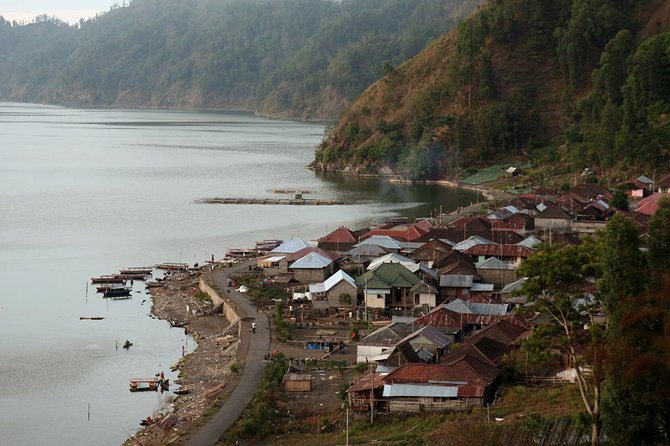
Bayung Gede offers a very different kind of ritual. The village is considered the parent of Bali’s ancient villages, and its best-known custom involves newborn placentas hung in containers after birth.
That detail can sound startling when reduced to one sentence. In person, the stop works better when you think of it as a window into how birth, family, and place are connected in Balinese belief. The visit lasts about an hour, and there is no separate admission charge.
This is one of the tour’s strongest cultural stops because it is not simply another temple visit. You see a local custom that many people never encounter during a standard Bali holiday. The guide’s explanation is important, since the meaning can easily be missed if you only look at the objects without context.
The subject may not suit every person, particularly if you prefer light sightseeing. Still, anyone curious about how religious ideas shape ordinary life will find Bayung Gede more revealing than a quick photo stop.
Kintamani gives the day some breathing room
After the ritual sites, the Kintamani Plateau offers a change of pace. You stop for about 30 minutes to see Mount Batur and Lake Batur from the highlands.
This is a short visit, so treat it as a viewpoint break rather than a long exploration. The cooler upland setting helps break up the long drive, and the volcano and lake provide a visual counterpoint to the intimate village customs earlier in the day.
Admission is included. You will want to keep expectations realistic, though. Thirty minutes is enough to pause, look, and take photographs, but not enough for a detailed visit around the plateau. Weather and visibility can affect what you see, so the stop is best viewed as a welcome part of the route rather than the central purpose of the tour.
I like this balance. A full day devoted only to death and birth rituals could feel heavy. Kintamani gives you a physical and mental pause before the temple and village visits continue.
Kehen Temple and the famous steps
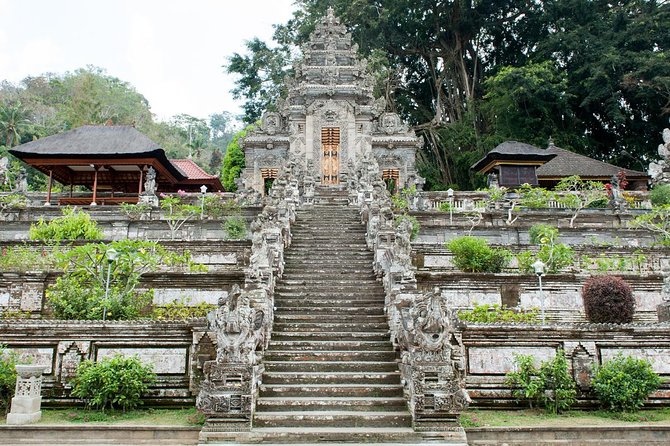
Kehen Temple is the day’s main temple stop, with about an hour set aside for the visit. It is known for its famous steps of heaven, which give the approach a strong sense of arrival.
The temple adds a familiar Balinese element, but it is not just filler between the unusual villages. It lets you place the earlier customs within a wider religious setting. Here, architecture and sacred space become the focus rather than burial or birth.
Admission and donation fees are included, which makes the private price easier to assess. You will still want to dress and behave respectfully at any religious site, even though the supplied tour details do not specify a dress code.
An hour should give you time to climb the steps, look around, and listen to the guide. The stop may feel more straightforward than Trunyan or Bayung Gede, but that is part of the appeal. The day moves from highly personal rituals to a major religious site, then on to a traditional village.
Something else entirely, still a short drive from Kuta:
- Mount Batur Sunrise Trekking Private Tour with Breakfast and Hotel Transfer
★ 5.0 · 885 reviews - Individual Bali Day Trip with Private Driver and Free WiFi
★ 5.0 · 755 reviews - Waterbom Bali Tickets – Single Day Pass
★ 4.5 · 620 reviews - Uluwatu Temple Entry and Kecak Fire Dance Ticket
★ 5.0 · 479 reviews
Penglipuran and its bamboo forest
The final stop is Penglipuran Bamboo Forest and the old village beside it. The village is presented through its architecture, social system, and belief system, giving you another look at how community life is organized in Bali.
The visit lasts about an hour and includes admission. Compared with Trunyan, Penglipuran is easier to absorb. You can focus on the layout of the village, the traditional buildings, and the role of bamboo without carrying the same emotional weight as the cemetery stop.
This is a useful ending because it leaves you with a picture of living culture rather than only ancient ritual. The stop also rounds out the day’s themes: birth, death, worship, highland scenery, and community design.
Do not expect the same level of mystery at every stop. Penglipuran is more polished as a sightseeing visit, while Trunyan and Bayung Gede feel more unusual because of the customs themselves. The contrast is helpful, especially for a first visit to Bali.
What the private format really gives you
The tour is private, so only your group participates. That matters on a subject like this. You can ask a question about a ritual without worrying about interrupting a large group, and you can request changes to the pace when the long drive begins to wear you down.
The schedule can be customized to suit your needs, although the five listed stops and the boat crossing make this a full day in practice. Customization should not be confused with unlimited flexibility. The road distances, boat timing, opening arrangements, and planned visits still shape the day.
The air-conditioned vehicle is a practical benefit. You will spend many hours on the road, and a private vehicle gives you more comfort than a shared coach. Bottled water, fuel charges, parking, the speedboat, and admission and donation fees are included.
Lunch is not included. Plan for that cost before you leave, and ask the operator how the meal break fits into your route. The tour includes personal expenses only when specifically listed, so keep money available for anything outside the included items.
The experience is normally confirmed at booking, and most people can participate. One stated restriction says it is not recommended for women during their menstrual period. That is an important cultural and operator requirement to consider before booking.
Is $81.80 a fair price?
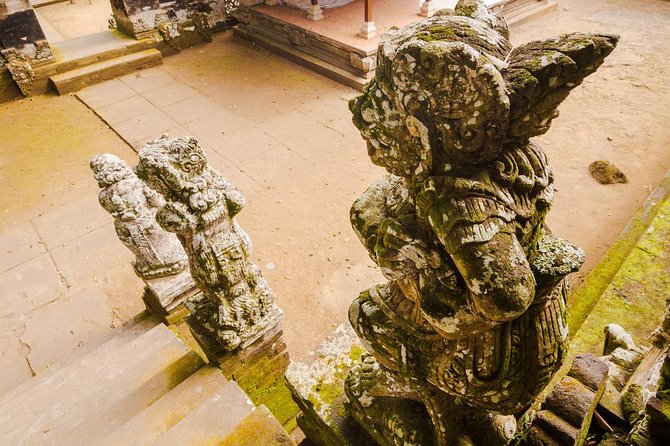
At $81.80 per person, the tour offers reasonable value if you want a private cultural day rather than a simple sightseeing transfer. The price covers the vehicle, driver and guide service, fuel surcharge, parking, speedboat, entry charges, donations, and bottled water.
The boat is not an optional extra. It is part of reaching Trunyan, so the included speedboat removes one cost that could otherwise catch you by surprise. Admission fees at the cemetery, Kintamani, Kehen Temple, and Penglipuran also make budgeting easier.
The price looks less attractive if you are mainly interested in a short temple visit or a volcano viewpoint. You are paying for distance, private transport, a boat crossing, and the guide’s interpretation of customs that are not easy to understand on your own.
The best value comes if you care about culture and want the freedom of a private vehicle. It is less suitable if you dislike long drives, winding roads, or a tightly packed day. Since lunch is extra, add that to the real cost.
The guides can shape the whole day
The guide is especially important here because the main attraction is not a monument you can understand at a glance. You need someone who can explain why Trunyan handles death differently, what the hanging placentas mean in Bayung Gede, and how the village and temple customs fit together.
Mertha is described as friendly, helpful, and well informed about the places visited. Ah Gung is praised for patiently explaining the culture and practices of the local community. You cannot necessarily request either guide unless the operator confirms availability, but their names give you a useful sense of the service style to expect.
Ask questions. This is the kind of tour where a quiet drive past a village will teach you little, while a good explanation can make the stop memorable. A private format gives you room to ask about customs, beliefs, and the difference between what happens in Trunyan and what you may have seen elsewhere in Bali.
Who should book this Bali day tour?
I would recommend it to you if you have already seen the standard temples and beaches and want something more unusual. It suits people who enjoy local customs, religious traditions, village life, and thoughtful explanations more than quick photo stops.
It is also a good fit for small groups who want privacy. Couples, families with older children, and friends can set their own questions and pace, provided everyone is comfortable with the subject matter and long travel time.
I would hesitate to recommend it if you want a relaxed day with little time in the car. The drive can be long, the mountain road can be narrow and winding, and the boat crossing adds more travel. From Lovina, the journey has been especially demanding for at least one participant who could not continue with the activity.
The cemetery may also be too confronting for some people. Read about the customs first, as the tour itself advises in practical terms. Curiosity is a good reason to go, but respect and emotional readiness matter just as much.
Should you book it?
Book this tour if Trunyan’s death ritual and Bayung Gede’s birth ritual are the reason you are coming. Those stops give the day its purpose, while Kintamani, Kehen Temple, and Penglipuran add scenery, worship, and village life.
Skip it if you are trying to avoid long road journeys or want a simple half-day outing. The strongest version of this experience is a private, open-minded day with a good guide, plenty of patience, and a willingness to engage with customs that may feel unfamiliar.
At 4.6 out of 5 from eight ratings, it has a strong overall score, but the small number of ratings means you should still weigh the transport warning carefully. Canceling is free up to 24 hours before the start time. Inside that window, the payment is not refunded and changes are not accepted.
FAQ
How long does the tour take?
The tour lasts approximately 8 to 10 hours. The total time can be affected by your pickup point, road conditions, the mountain route, and the boat crossing to Trunyan.
Is the tour private?
Yes. Only your group participates, and the private schedule can be customized to suit your needs.
Is lunch included?
No. Lunch is not included, so you should budget separately for your midday meal. Personal expenses are also not included.
What is included in the price?
The price includes bottled water, an air-conditioned vehicle, fuel surcharge, parking fees, the speedboat, and admission and donation fees.
Is the speedboat included?
Yes. The speedboat is included and is used as part of the journey to Trunyan Cemetery.
Can I cancel for a full refund?
You can cancel for a full refund up to 24 hours before the experience start time. Cancellations or changes made less than 24 hours before the start time are not accepted and are not refunded.
Fresh Bali write-ups
- Nusa Penida 4 Spot Snorkeling with Manta and Island Tour★ 4.5 · 11 reviews
- Your Fragrance Selection: Bali Perfume Workshop and Creations★ 5.0 · 3 reviews
- Bali Atv Riding through Cave and Waterfall★ 5.0 · 18 reviews
- Experience West Nusa Penida Private Tour★ 4.5 · 14 reviews
- West Nusa Penida Day Trip★ 5.0 · 8 reviews
- Bali Breathtaking Waterfall Tour★ 5.0 · 5 reviews
- Waterbom Bali Tickets – Single Day Pass★ 5.0 · 5 reviews
- Bali Halfday Tour Uluwatu★ 5.0 · 5 reviews