
Reviewed · BALI SCUBA DIVING FROM KUTA
PADI Open Water Course
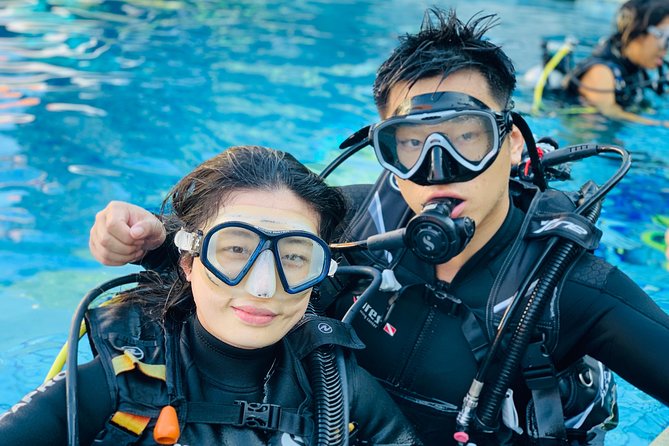
The most useful thing about this PADI Open Water Course is that it takes you from basic theory to independent underwater travel in three organized days. You learn the skills needed to reach a maximum depth of 18 meters, with classroom work, pool practice, and four open-water sessions at Padang Bai and Tulamben.
I like the small maximum group of three, which should give your instructor time to watch your technique closely. I also like that the $530 price includes hotel pickup, an air-conditioned minivan, lunch, drinks, snacks, and all course fees. The main drawback is the tight schedule: three days leaves little room if you need extra practice or if sea conditions disrupt the plan.
Key points to know
- Four open-water sessions: Training continues at Padang Bai and Tulamben after the classroom and pool work.
- Small group size: The course accepts a maximum of three participants.
- Three-day format: You complete knowledge development, pool skills, and sea training in a short but demanding schedule.
- Several instructors are praised by name: Sia, Agus, Gede Ariawan, Julian, and Muli are associated with especially patient and careful instruction.
- Useful package inclusions: Hotel transfers, lunch, bottled water, coffee, tea, snacks, and an air-conditioned minivan are covered.
- Important flight rule: You should not scuba within 18 hours of flying.
A three-day path to your first certification
This course is designed for someone starting from the beginning. You do not need prior certification, and the minimum age is 10. Most participants can take part, but you must complete a health questionnaire and be in good respiratory and circulatory health.
The training has three parts. First comes knowledge development, where you learn the basic rules, equipment use, safety procedures, and underwater planning needed for a PADI Open Water qualification. Next comes pool training, where you can work on skills in a controlled setting before heading into the sea.
The final stage includes four open-water sessions. That progression matters. You are not asked to handle open-water conditions before learning the basics or practicing the skills under supervision.
The course is short, but it is not a casual sightseeing outing. You will need to listen carefully, practice repeatedly, and stay calm while learning unfamiliar equipment. If you are nervous in the water, tell your instructor early. Past participants specifically praised the patience of instructors such as Gede and Muli, including when students had limited swimming experience or needed help with buoyancy control.
More diving in Bali:
- Scuba Diving in Nusa Penida – Manta Point
★ 5.0 · 198 reviews - Day Trip certified divers – 3 Dives in Tulamben (pick-up & drop-off included)
★ 5.0 · 178 reviews - Try Diving in Manta Point – Nusa Penida
★ 5.0 · 41 reviews
Starting at Neptune Scuba in Sanur
The stated meeting point is Neptune Scuba Diving Bali on Jalan Suka Merta in Sanur Kauh, Denpasar Selatan. The activity ends back at this meeting point, although hotel pickup and drop-off are included.
That arrangement is useful if you are staying in the Sanur area or prefer not to arrange transport yourself. The air-conditioned minivan also makes the long movement between the base, training areas, and coastal sites easier. You should still confirm your pickup details after booking, especially if your hotel is outside the usual service area.
The course operates daily, with listed opening hours from 7:00 a.m. to 6:00 p.m. A full training day can feel tiring, so plan light evening activities and avoid scheduling another demanding excursion between course sessions.
The maximum group size of three is one of the strongest practical features. Scuba training involves small corrections: hand position, breathing, equipment handling, body balance, and controlled ascents. A very large class can leave you waiting for attention. Here, the stated limit gives the instructor a better chance to notice when you need help.
Knowledge development before the sea sessions
The first phase gives you the foundation for safe underwater travel. You learn what the equipment does, how to respond to common problems, and how to plan your time and depth. The course description does not list a detailed classroom timetable, so ask Neptune Scuba how much of the theory is completed in person and how much can be done online before arrival.
Some people mentioned completing theory through the PADI website before coming to Bali. That approach can leave more time for pool work and the sea sessions, though you should confirm the available format directly with the operator.
This stage is not filler. It is where you begin to understand why you must manage air, control your ascent, and respect the 18-meter depth limit. You are learning a skill set you can use beyond Bali, not simply preparing for one morning near the coast.
If you are short on holiday time, the three-day format is attractive. If you learn slowly or feel uneasy about equipment, a longer schedule may feel more comfortable. Ask whether an extra practice session is possible before you commit to fixed flights or other tours.
Pool training gives you room to make mistakes
The pool phase is where the course becomes physical. You put the theory into practice while the instructor can keep a close eye on your equipment and technique. This is the right setting to get used to breathing through a regulator, wearing the equipment, clearing water, and controlling your position in the water.
The supplied details do not identify the pool or list every required skill, so I would not assume the exact layout or facilities. What matters is the order: practice comes before the four sea sessions.
Students praised the instructors for patience, particularly Gede Ariawan and Muli. One person who was not a strong swimmer found Muli encouraging and clear. Another received help with buoyancy control. Those details are useful because buoyancy is often the skill that makes a new participant feel either relaxed or awkward underwater.
Do not rush this part. If you are struggling to stay level, communicate it. Good training is not about finishing the skill list as fast as possible. It is about being able to repeat the skills without panic.
Something else entirely, still a short drive from Kuta:
- Nusa Penida day trip: boat, 4 snorkeling, Manta rays & Land tour
★ 5.0 · 2,033 reviews - Bali Nusa Penida West Private All-Inclusive Tour
★ 5.0 · 1,277 reviews - Private Uluwatu Temple and Kecak Fire Dance Evening Tour in Jimbaran Bay
★ 5.0 · 1,199 reviews - Mount Batur Sunrise Trekking Private Tour with Breakfast and Hotel Transfer
★ 5.0 · 885 reviews
Four open-water sessions at Padang Bai and Tulamben
The sea training takes place at Padang Bai and Tulamben, two well-known scuba areas on Bali’s east coast. The course description identifies the sites but does not promise particular animals, wreck views, water conditions, or visibility. Your experience can change with weather and sea conditions, so treat the locations as training sites rather than guaranteed underwater attractions.
Padang Bai is part of the course’s open-water stage, where you begin applying pool skills in a real sea setting. Tulamben adds another location and gives you a change of scenery during the training. The value is not only visual. Moving from a controlled pool to two coastal sites helps you build confidence in different conditions.
The four sessions give you more than a single introduction. You get repeated chances to work on breathing, buoyancy, equipment checks, and safe movement. That repetition is important for a first certification because the aim is to make the procedures familiar rather than theoretical.
The schedule may be tiring. Travel from Sanur toward Bali’s east coast can take time, and a day involving transport, preparation, several water sessions, and meals can feel long. The included driver and air-conditioned minivan remove much of the planning burden, but you should still bring energy and patience.
What the $530 price really covers
At $530 per person, this is not the cheapest way to spend three days in Bali. It is also not simply a guided underwater outing. You are paying for a recognized entry-level certification course, instruction, equipment and training arrangements, transport, meals, and the administration tied to the course.
The included food is simple but useful: lunch, bottled water, coffee or tea, and snacks. Those extras matter on long training days, when stopping to find food can make the schedule harder to manage.
Hotel pickup and drop-off add real value if you are not based near Sanur. The air-conditioned minivan is another practical inclusion, especially for the journey to Padang Bai and Tulamben. You also receive professional and driver-guide support, though the exact staffing may vary.
Souvenir photos are not included. They can be purchased separately. If underwater photographs matter to you, ask about the price and availability before the course begins rather than assuming a camera service is part of the package.
The best value comes if you genuinely want certification. If you only want to see underwater scenery once, a shorter introductory session may suit you better. This course asks for more time and effort, but it gives you a qualification intended for future scuba use.
The instructors and the human side of training
The strongest personal detail attached to this course is the repeated praise for patient instruction. Gede Ariawan is described as kind, personal, and careful with explanations. Muli is associated with encouragement and help with buoyancy. Sia and Agus are also noted for patient, professional support, while Julian is connected with a well-organized course.
Instructor assignments can change, so do not book solely to request one particular person. Still, these names give you a useful sense of what to ask for: calm explanations, individual correction, and enough time to repeat a skill when needed.
That matters more than flashy presentation. A new participant may need a skill explained twice, or may need to pause after an uncomfortable moment. You should feel able to say that you need help. A patient instructor is especially important for anyone who is a weak swimmer, anxious in open water, or new to regulated breathing.
Neptune Scuba also offers continuing courses and additional sessions, according to the experiences described by participants who went on to complete advanced training and extra outings. You do not have to plan beyond Open Water certification, but the option may appeal if Bali is the start of a longer scuba journey.
Health, age, and flight planning
The minimum age is 10. All participants must complete a health questionnaire before entering the water.
The operator specifically warns against scuba within 18 hours of flying. Build that rule into your holiday plan. Do not schedule your final session close to your departure flight, and do not treat the 18-hour interval as a suggestion to ignore.
Certain health conditions may prevent participation. The information provided specifically names asthma, heart conditions, coronary disease, epilepsy, a current cold or congestion, and other serious medical problems. Your respiratory and circulatory systems must be in good health, and all body air spaces must be normal and healthy.
If you are unsure about your fitness for scuba, consult your doctor before booking. You must also avoid alcohol and drugs before participating. This is one area where honesty on the health form protects you and the instructor.
Who will get the most from this course
This course suits you if you want an internationally recognized starting qualification and can give three days to training. It is a good match for a first-time participant who wants structured instruction rather than a quick taste of underwater activity.
It may also suit families with older children, since the minimum age is 10, provided the child meets the health requirements and can handle the training. The small group limit is helpful for anyone who wants close supervision.
You may want to reconsider if you have a tight flight schedule, unresolved health concerns, or little patience for classroom work. The course is not an all-day holiday on the beach. You must learn safety rules, practice skills, and complete four supervised sea sessions.
The course is also less suitable if your main goal is photography. Photos are available for purchase, but they are not included, and the priority is training rather than a photo package.
Booking advice and cancellation terms
The activity is generally booked about 11 days ahead, so you do not need to reserve many months in advance based on the information provided. Still, booking earlier is sensible if you need hotel pickup, a specific date, or a particular holiday schedule.
You receive confirmation at booking. The activity is mobile-ticket based, and public transportation is nearby if you need it.
Free cancellation is available up to 24 hours before the local start time for a full refund. Cancellations or changes made less than 24 hours before the start are not accepted for a refund. Keep your flight plans in mind before fixing the final course day.
Should you book this PADI course?
Book it if you want to leave Bali with a real Open Water qualification, value a small group, and appreciate having transport and meals arranged. The combination of pool practice, four sea sessions, and named instructors praised for patience makes this a strong choice for a careful beginner.
Think twice if you only want a brief underwater introduction, dislike structured study, or fly home soon after the final session. For everyone else, the $530 cost is reasonable when you use the included transfers, food, instruction, and certification training. Neptune Scuba gives you a practical route from nervous beginner to supervised, independent scuba participant at depths up to 18 meters.
FAQ
How long does the PADI Open Water Course take?
The course lasts approximately three days. It includes knowledge development, pool training, and four open-water sessions.
Where does the open-water training take place?
The four open-water sessions take place at Padang Bai and Tulamben in Bali.
Where does the activity start and end?
It starts at Neptune Scuba Diving Bali on Jalan Suka Merta, Sanur Kauh, Denpasar Selatan, Denpasar, Bali. The activity ends back at the meeting point.
Is hotel transportation included?
Yes. Hotel pickup and drop-off are included, along with transport in an air-conditioned minivan.
What food and drinks are included?
The package includes lunch, bottled water, coffee or tea, and snacks.
What is the minimum age?
The minimum age is 10 years.
Can I fly soon after the course?
Scuba within 18 hours of flying is not recommended. Plan your final session with that interval in mind.
Fresh Bali write-ups
- Nusa Penida 4 Spot Snorkeling with Manta and Island Tour★ 4.5 · 11 reviews
- Your Fragrance Selection: Bali Perfume Workshop and Creations★ 5.0 · 3 reviews
- Bali Atv Riding through Cave and Waterfall★ 5.0 · 18 reviews
- Experience West Nusa Penida Private Tour★ 4.5 · 14 reviews
- West Nusa Penida Day Trip★ 5.0 · 8 reviews
- Bali Breathtaking Waterfall Tour★ 5.0 · 5 reviews
- Waterbom Bali Tickets – Single Day Pass★ 5.0 · 5 reviews
- Bali Spa Tour, Beaches, Uluwatu Temple Sunset & Jimbaran Bay Dinner★ 5.0 · 13 reviews
Bali Scuba Diving from Kuta, compared.
Day Trip certified divers – 3 Dives in Tulamben (pick-up & drop-off included)
Read our review →
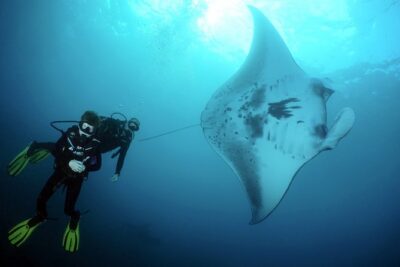
Scuba Diving Nusa Penida Manta Point 3 dives for certified divers
Read our review →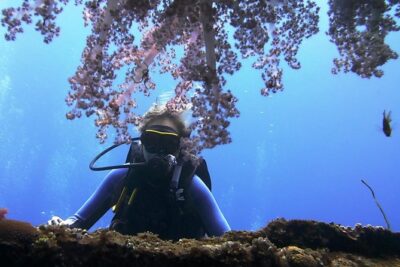
Bali Scuba Diving trip at Tulamben for Certified Diver
Read our review →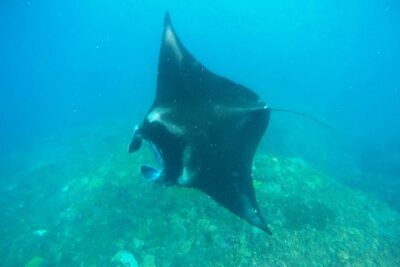
Bali Scuba Diving at Nusa Penida Manta Point For Certified Diver
Read our review →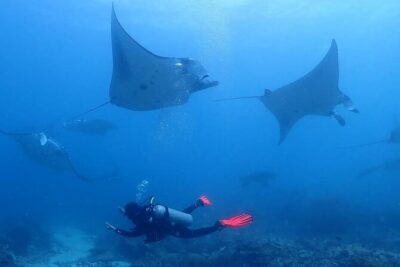
Fun Dive Nusa Penida Bali – For Certified Divers
Read our review →Browse the lists this tour appears in