
Reviewed · BALI CULTURAL VILLAGE TOURS FROM KUTA
Balinese Village Experience
The heart of this day is a visit to a real Balinese family compound with guide Wayan Eric, followed by hands-on lessons in making canang sari, the small offerings placed in daily Hindu rituals. This is a cultural visit with something to do, not just something to photograph.
I like the personal welcome over morning tea, coffee, and Balinese cakes, and I like the way the day connects home life with a sacred water temple. The main consideration is the long schedule, about seven hours, and the non-refundable booking policy, so you will want to be sure this slower cultural outing fits your Bali plans.
Key points
- Meet a local family: Begin at Wayan Eric’s family compound and hear how Balinese Hinduism shapes ordinary home life.
- Make your own canang sari: Learn about the daily flower offerings instead of simply watching a ceremony.
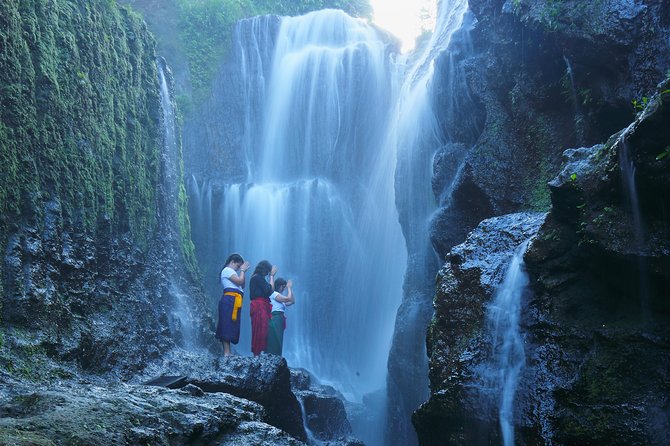
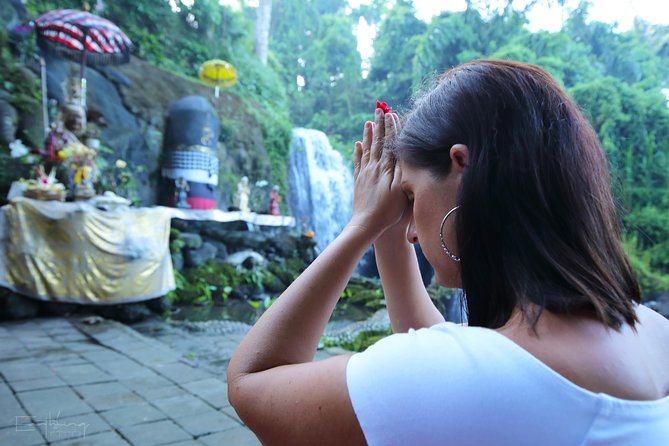
- Take part in a blessing: Visit a holy water temple, including a waterfall and caves mentioned as part of the cleansing experience.
- Eat like a local: Morning tea, Balinese cakes, and lunch at a scenic warung are included.
- Keep the group small: The maximum is 10 people, which matters when you are visiting a private home.
- Save transfer time: Pickup and drop-off are offered for most hotels in south Bali.
A village day built around real daily life
Many Bali outings show you temples, rice fields, and dance performances in quick succession. This one takes a different route. You spend time in Pacung Sangeh village, meet a local family, and learn how religion appears in the small routines of home life.
That difference matters. You are not only hearing that Balinese Hinduism is important. You are shown one of its everyday expressions through the preparation of canang sari, the flower offerings made and placed as part of daily worship.
The visit is led by Wayan Eric, a village host who grew up in the area. You begin at his family home, where the setting gives the day a personal scale. A family compound is not a museum display. It is a lived-in place, and that makes the conversation about customs and faith easier to connect with.
I would choose this experience if you want more than a quick temple stop. It gives you time to ask questions, watch how a household functions, and take part in a simple activity with cultural meaning.
More village and heritage days:
- Ubud Top Tours to Discover Bali’s Cultural and Natural Wonders
★ 5.0 · 106 reviews - Bali Cultural Experience
★ 5.0 · 92 reviews - Tanah Lot & UNESCO Heritage Small Group Tour
★ 4.5 · 21 reviews
Morning tea at Wayan Eric’s family compound
Pickup begins around 8:30 a.m. from most south Bali hotels, followed by a transfer to the meeting point with the guide. The transfer is useful if you are staying in the Kuta area or elsewhere in southern Bali and do not want to arrange a separate driver for the morning.
At the family compound, you are welcomed with Balinese morning tea, coffee, and traditional cakes. This opening is more than a snack break. It gives you time to settle in before the practical parts of the visit begin.
The cakes are a small but worthwhile detail. Food often explains a place better than a long speech, and a morning plate of local sweets gives you a gentle introduction to Balinese tastes. Lunch later in the day continues that food theme.
Eric also explains how his faith shapes home life. One especially praised part of the experience is the chance to learn how Balinese Hinduism affects ordinary routines, not only temple festivals or formal ceremonies. If you are curious about why offerings appear outside homes, shops, and other daily spaces, this is the part of the day to pay attention.
The family setting also makes this a stronger choice for parents and children than a lecture-heavy cultural tour. One family with children aged six and eight found Eric patient and clear, and the children enjoyed taking part in the cleansing ceremony. That suggests the day can work well for curious young visitors, provided they are comfortable with a full morning and a religious ritual.
Making canang sari with your own hands
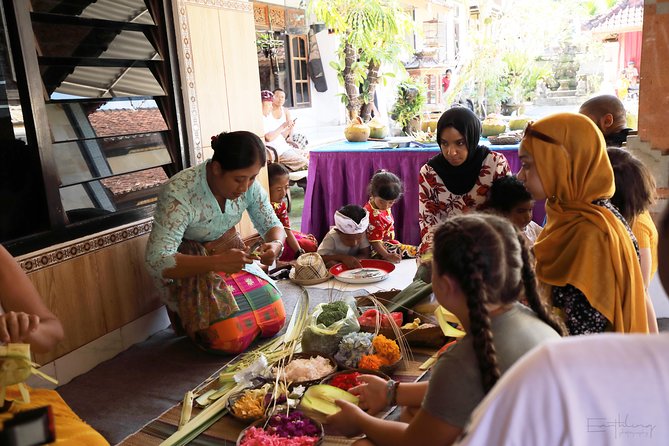
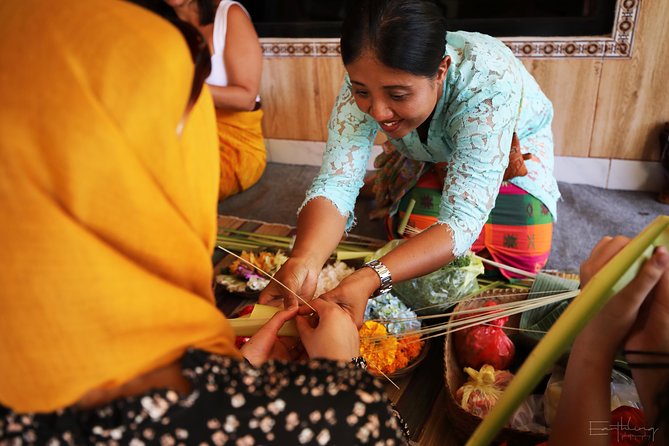
The canang sari lesson is one of the clearest reasons to book this outing. You learn how the traditional offering is made, rather than simply passing a row of finished offerings on the way to a temple.
The activity gives you a useful way to understand Balinese Hindu practice. Flowers, presentation, and daily repetition become easier to appreciate once you have tried to prepare an offering yourself. It also creates a natural chance to ask Eric what the offerings mean and how they fit into village life.
This is not presented as a craft workshop detached from religion. The offering has a purpose, and the lesson leads into the wider discussion of Balinese beliefs. That link between handwork and faith is what makes the activity memorable.
You should also expect a respectful tone. You are entering a religious and family setting, so follow the guide’s instructions and treat the materials and rituals seriously. The supplied information does not set out a formal dress code, so ask the operator for current clothing guidance before you go if you are unsure.
For photographers, this section offers appealing details, but the point is not to turn the family home into a photo set. Ask before taking pictures of people or household areas, and let the guide set the pace.
From the village to a holy water temple
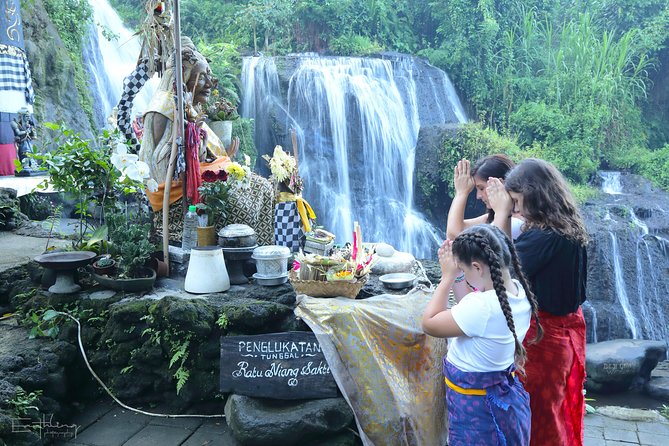
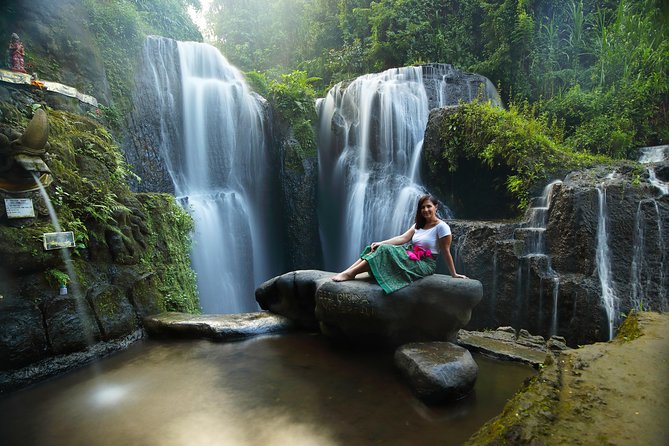
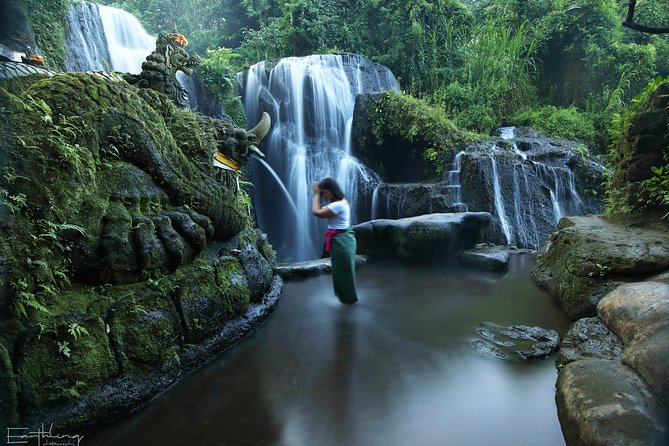
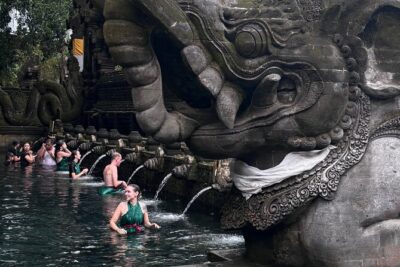
The day then moves from household practice to a sacred water setting. The experience includes a holy water temple, with a waterfall and caves described as part of the blessing experience.
This is where the day takes on a more spiritual character. The cleansing ritual is not simply a sightseeing stop. Eric guides you through the process, helping explain what you are doing and why it matters.
One of the strongest details from the experience is that children took part in the cleansing ceremony and enjoyed it. Another account describes the waterfall and caves as a particularly meaningful setting for the holy blessing. You should expect the water-temple portion to be more participatory than a standard temple visit.
At the same time, you need to be comfortable with the religious nature of the activity. This is not a performance arranged only for visitors. It is a blessing ritual connected to Balinese Hindu practice, and respectful behavior is essential.
The exact sequence and conditions at a water temple can vary, and the supplied details do not give a full list of facilities or clothing rules. Ask Eric or Bali Buddies what to bring and how to dress before departure. That is especially sensible if you are traveling with children or anyone who may need extra preparation for a water-based ritual.
Something else entirely, still a short drive from Kuta:
- Nusa Penida day trip: boat, 4 snorkeling, Manta rays & Land tour
★ 5.0 · 2,033 reviews - Bali Nusa Penida West Private All-Inclusive Tour
★ 5.0 · 1,277 reviews - Private Uluwatu Temple and Kecak Fire Dance Evening Tour in Jimbaran Bay
★ 5.0 · 1,199 reviews - Mount Batur Sunrise Trekking Private Tour with Breakfast and Hotel Transfer
★ 5.0 · 885 reviews
Lunch at a scenic warung
Lunch is included at a scenic warung, a local-style restaurant. This gives the day a useful pause after the village visit and temple experience.
The meal is part of the cultural value here, not just a convenient way to fill an hour. You already have a taste of local food with the morning cakes, and lunch lets you continue that introduction in a more substantial form.
The information provided does not list the exact dishes, so do not book this expecting a named menu. Instead, think of it as a chance to eat typical food in a casual setting. One especially positive account describes the lunch as delicious, but your meal may depend on the day’s arrangements.
The scenic setting also gives you time to take stock. After a morning of conversation, making offerings, and participating in a blessing, a relaxed meal helps keep the schedule from feeling like one nonstop lesson.
If food is a major reason for booking, this tour may not give you the same detail as a dedicated cooking class or food tour. If food is part of a broader cultural day, the included morning treats and lunch add good value.
Why the small group limit matters
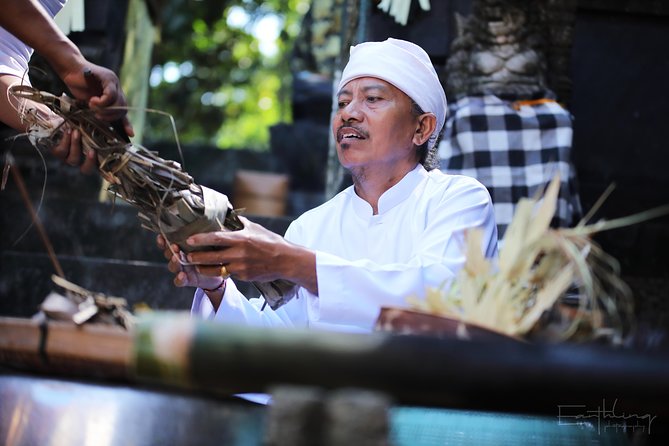
The maximum group size is 10 people. That is a practical advantage when the central stop is a private family compound.
A small group makes it easier to hear explanations, ask questions, and take part in making offerings. It also reduces the awkwardness that can come with bringing a large crowd into a residential setting.
Small does not always mean private. The experience can still include other participants, and the available information does not promise a one-to-one visit. Still, a limit of 10 is more suitable for this kind of personal cultural exchange than a large coach outing.
The guide is another important part of the experience. Eric’s connection to the village gives the day a direct human link, and his role includes explaining both home life and the cleansing ritual. The accounts provided repeatedly praise his patience and his ability to explain traditions clearly, which is particularly useful for families and first-time visitors to Bali.
What the seven-hour schedule means for your Bali plans
The full experience lasts about seven hours, with an early start at 8:30 a.m. That is long enough to make the day feel substantial, but it also uses most of a sightseeing day.
You should avoid pairing this with a tightly timed afternoon activity, especially if you have a flight, a spa booking, or a separate excursion later. Pickup and drop-off save planning effort, but traffic and the pace of a cultural visit can affect the return time.
The listed village stop is shown as about four hours, while the full tour is around seven hours. The difference likely covers transfers, lunch, and the water-temple portion. Since the detailed sequence can vary, allow the full morning and afternoon rather than treating the four-hour figure as the total outing.
Pickup is offered from most south Bali hotels. This is useful for people staying around Kuta and nearby southern resort areas. The information does not confirm pickup from every hotel or every part of Bali, so check your address before booking.
Is $70 fair value?
At $70, the price covers about seven hours, hotel transfers for eligible south Bali locations, a local guide, morning tea, coffee, Balinese cakes, lunch, the village visit, the offering lesson, and the holy water experience.
I see the value mainly in the access and structure. You are not paying only for transport to a temple. You are paying for a guide who connects a family home, daily religious practice, food, and a water blessing into one day.
The price is easier to justify if you would otherwise hire a private driver, pay for separate meals, and arrange a temple visit on your own. It is less compelling if you want a fast list of major sights or prefer to explore independently.
The small group limit also helps the value. A group of no more than 10 is a sensible size for a family visit and hands-on activity. Still, the experience is not a bargain cultural show. Its appeal depends on your interest in conversation, customs, and participation.
Who should book this Balinese village experience?
I would recommend it most strongly to:
- Families who want a cultural activity that children can take part in
- First-time visitors who want context for Balinese Hindu customs
- Couples looking for a quieter day away from resort areas
- People who prefer meeting local hosts to ticking off major attractions
- Anyone interested in food, household traditions, and religious practice together
It may not suit you if you dislike religious ceremonies, do not want to get involved in a blessing ritual, or prefer a schedule packed with famous sights. The day is built around personal contact and explanation, not a rapid circuit of attractions.
It is also worth considering your energy and timing. Seven hours is a serious portion of the day, and the 8:30 a.m. pickup means you need to start early. In return, you get a fuller cultural experience than a short temple stop usually allows.
The activity is described as suitable for most participants, and service animals are allowed. There is no stated maximum age or special fitness requirement in the supplied details, but the water-temple setting and full-day schedule are still worth considering for anyone with mobility or stamina concerns.
Booking and cancellation details to know
Confirmation is sent within 48 hours of booking, subject to availability. The group has a maximum of 10 people, and the tour requires a minimum number to operate.
The booking is non-refundable and cannot be changed for any reason. If you cancel or request an amendment, the amount paid is not returned. If the operator cancels because the minimum number is not reached, you are offered another date or experience, or a full refund.
That strict policy makes travel planning important. I would book only after confirming your hotel pickup area, date, and ability to commit to the full seven-hour outing.
Should you book it?
Book this experience if you want Bali explained through a family home, a handmade offering, a shared meal, and a sacred water ritual. The strongest parts are the personal welcome from Wayan Eric, the chance to take part in making canang sari, and the patient guidance through the cleansing ceremony.
Skip it if you want a short, attraction-heavy tour or would rather avoid religious participation. For families, culturally curious couples, and anyone staying in south Bali who values local contact, $70 is a reasonable price for a well-filled day. Just leave room in your schedule, confirm pickup, and remember that the booking cannot be refunded or changed.
FAQ
Where does the Balinese Village Experience take place?
The experience takes place in Pacung Sangeh village, with pickup and drop-off offered from most south Bali hotels.
What time does the tour start?
Pickup begins at about 8:30 a.m.
How long does the experience last?
The full experience lasts approximately seven hours.
What will I do at the family compound?
You visit a local family compound, meet guide Wayan Eric and his family, enjoy morning tea, coffee, and Balinese cakes, and learn about Balinese home life and Hindu traditions.
Will I learn to make a Balinese offering?
Yes. You learn how to make canang sari, the traditional daily offerings used in Balinese Hindu practice.
Does the tour include a temple visit?
Yes. The day includes a visit to a sacred water temple and a blessing ritual. The experience also describes a waterfall and caves connected with the holy blessing.
Is lunch included?
Yes. Lunch at a scenic warung is included, along with the morning tea, coffee, and Balinese cakes.
How many people can join the tour?
The maximum group size is 10 people.
Can I cancel or change my booking?
No. The experience is non-refundable and cannot be changed for any reason. If the operator cancels because the minimum number of participants is not reached, you are offered another date or experience, or a full refund.
Fresh Bali write-ups
- Nusa Penida 4 Spot Snorkeling with Manta and Island Tour★ 4.5 · 11 reviews
- Your Fragrance Selection: Bali Perfume Workshop and Creations★ 5.0 · 3 reviews
- Bali Atv Riding through Cave and Waterfall★ 5.0 · 18 reviews
- Experience West Nusa Penida Private Tour★ 4.5 · 14 reviews
- West Nusa Penida Day Trip★ 5.0 · 8 reviews
- Bali Breathtaking Waterfall Tour★ 5.0 · 5 reviews
- Waterbom Bali Tickets – Single Day Pass★ 5.0 · 5 reviews
- Bali Halfday Tour Uluwatu★ 5.0 · 5 reviews
Bali Cultural Village Tours from Kuta, compared.
Ubud Top Tours to Discover Bali’s Cultural and Natural Wonders
Read our review →
Best Day Tour – #3 World Cleanest Traditional Village
Read our review →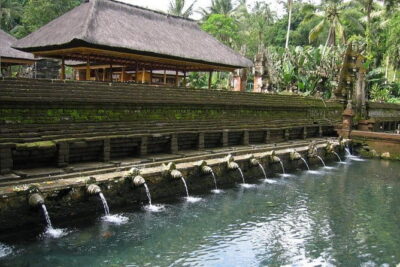

Rafting Adventure 18 km and Balinese Village Life Tour with Lunch
Read our review →
Northern Bali Highlights + Unesco Scenic Heritage Rice Terrace.
Read our review →Browse the lists this tour appears in